
 February 25, 2026
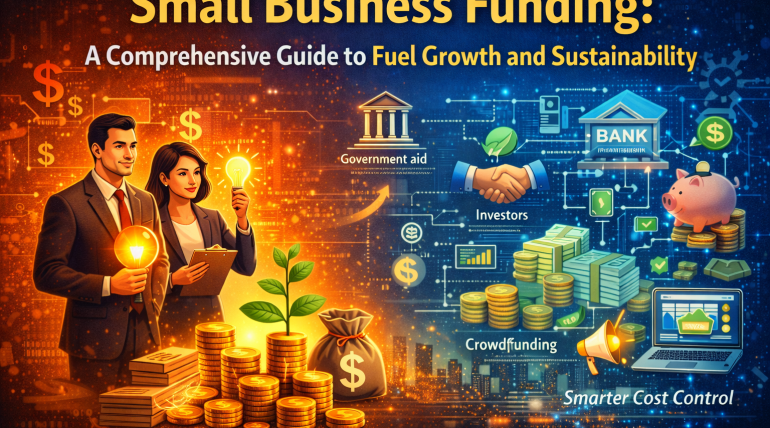
Access to funding is one of the most critical factors that determines whether a small business thrives — or struggles. Whether you’re launching a startup, scaling operations, or navigating tough market conditions, understanding how to secure the right financing can make all the difference. At GE Consult Asia, we help entrepreneurs and small businesses navigate the complex world of funding to unlock growth potential and build resilient enterprises.
In this guide, we will explore the types of funding available, how to choose the best option for your business, strategies to improve funding success, and common pitfalls to avoid.
Why Small Business Funding Matters
Small businesses are the backbone of economies around the world. In Asia alone, millions of micro, small, and medium enterprises (MSMEs) drive employment, innovation, and economic vibrancy. Yet, despite their importance, many entrepreneurs struggle to secure capital, especially in the early stages.
Funding matters because it enables businesses to:
- Launch new products or services,
- Hire essential talent,
- Invest in marketing and expansion,
- Upgrade technology and infrastructure,
- Weather economic downturns,
- Maintain cash flow during seasonal variability.
Without access to capital, even the most promising small business can falter.
At GE Consult Asia, we’ve seen firsthand how strategic funding decisions can transform a business — turning uncertainty into stability, and ambition into achievement.
Types of Small Business Funding
There isn’t a one-size-fits-all approach to financing. Your choice depends on your business model, growth stage, revenue stability, risk tolerance, and long-term goals. Let’s break down the most common funding options available to small businesses.
- Bootstrapping / Personal Savings
Many entrepreneurs begin by funding their ventures with personal savings, credit cards, or funds borrowed from family and friends. This approach gives you complete control and avoids debt or equity dilution, but it can also increase personal financial risk.
Bootstrapping works best when:
- Your startup costs are low,
- You can generate revenue quickly,
- You’re comfortable with slow, organic growth.
- Bank Loans
Traditional bank loans are a common funding source for small businesses with an established track record. These loans typically offer competitive interest rates, structured repayment terms, and larger amounts than other options. However, they often require solid credit history, collateral, and detailed financial documentation.
Pros:
- Predictable repayment schedules
- No equity dilution
Cons:
- Qualification barriers
- Personal guarantees may be required
- Microloans and Government Schemes
In many countries, governments and financial institutions offer microloans or subsidized financing programs designed specifically for small and emerging businesses. These loans often come with lower interest rates and more flexible eligibility criteria than traditional bank loans.
At GE Consult Asia, we help clients identify government schemes and eligibility criteria to make the most of these opportunities.
- Angel Investors
Angel investors are high-net-worth individuals who provide funding in exchange for equity or convertible debt. Beyond capital, angels often bring valuable expertise, mentorship, and networks.
This option is well-suited for businesses with:
- High growth potential
- Scalable business models
- A strong pitch and clear future vision
- Venture Capital (VC)
Venture capital is typically reserved for high-growth startups that need significant capital to expand rapidly. VC funding comes with not only money but also professional guidance, strategic support, and industry connections.
However, VC funding often requires:
- A strong growth trajectory
- A clear exit strategy
- A willingness to share ownership
- Crowdfunding
Platforms such as Kickstarter, Indiegogo, and GoFundMe enable entrepreneurs to raise funds from a broad base of contributors. Successful crowdfunding depends on a compelling story, strong marketing, and community engagement.
Advantages:
- Validation of product or idea
- Exposure to early adopters
Challenges:
- Requires intensive marketing effort
- May not yield substantial funds without broad appeal
- Trade Credit and Supplier Financing
For businesses with reliable supplier relationships, negotiating payment terms or supplier-financed inventory can be a form of short-term funding that reduces cash flow pressure.
Choosing the Best Funding Option
With so many choices, how do you decide? Here are key factors to consider:
- Stage of Your Business
- Early Stage: If you’re just starting, bootstrapping, microloans, or crowdfunding might be most realistic.
- Growth Stage: If you’re scaling, angel investors or venture capital may offer the capital and expertise you need.
- Established but Capital-Constrained: Bank loans or supplier credit may be ideal.
- Cost of Capital
Some funding options are cheaper than others. Debt financing (like loans) may cost less in terms of ownership dilution, but interest payments add ongoing costs. Equity funding reduces repayment pressure but dilutes ownership.
- Risk Tolerance
Evaluate how much risk you’re willing to take on. Personal loans or high-interest credit can strain cash flow. Equity investors may influence strategic decisions.
- Business Model Fit
Certain industries attract specific investors — for example, tech startups often pursue VC, while small retail businesses may lean toward loans or microfinancing.
How to Improve Your Funding Success Rate
Securing funding is an art and a science. Here are proven strategies to increase your chances:
- Build a Strong Business Plan
Lenders and investors want to see a clear plan that outlines:
- Market opportunity
- Revenue model
- Competitive advantage
- Financial projections
- Risks and mitigation strategies
At GE Consult Asia, we help clients develop investment-ready business plans that speak the language of capital providers.
- Maintain Good Financial Records
Accurate and transparent financial statements build credibility. Investors and lenders assess:
- Cash flow history
- Profit margins
- Expense trends
- Balance sheet strength
If your record-keeping needs improvement, consider engaging professional accountants early.
- Know Your Numbers
Whether it’s your break-even point, customer acquisition cost, or lifetime value, understanding key financial metrics strengthens your pitch and decision-making.
- Network Strategically
For equity funding, connections matter. Attend industry events, investor meetups, accelerator programs, and pitch competitions. GE Consult Asia helps connect promising entrepreneurs with relevant funding ecosystems.
- Choose the Right Lender or Investor
Not all capital is equal. Some investors bring strategic value — industry expertise, mentorship, distribution networks — that outweigh monetary contributions.
Common Pitfalls to Avoid
Even experienced entrepreneurs can fall into traps that undermine funding success:
- Overestimating Market Size
Being optimistic is good — being unrealistic is not. Investors look for credible assumptions supported by market research.
- Ignoring Cash Flow Management
Revenue numbers are essential, but cash flow keeps the doors open. Poor cash flow forecasting can make even profitable businesses fail.
- Taking on Expensive Debt
High-interest debt can drain resources quickly. Evaluate repayment capacity before signing any agreement.
- Misaligned Investor Expectations
Ensure that investor timelines, growth expectations, and exit strategies align with your business goals.
Funding and Growth: The Role of Strategic Advisors
Identifying the right funding path is challenging, especially in dynamic markets. That’s where strategic advisors like GE Consult Asia come in.
We help small businesses at every stage:
- Assess financial health
- Match funding options to business realities
- Prepare documentation and financial models
- Pitch to investors and lenders
- Optimize governance and financial processes
Our mission is simple: to help entrepreneurs secure the capital they need — without sacrificing clarity, control, or sustainability.
Conclusion: Funding Isn’t Just Money — It’s a Strategic Enabler
Small business funding is not just about raising capital — it’s about fueling strategy, enabling growth, and strengthening resilience. With the right approach, an entrepreneur can turn financial constraints into opportunities for smarter, more disciplined growth.
From bootstrapping to venture capital, each funding option has its place — but success depends on thoughtful planning, informed decisions, and robust execution.
Whether you’re launching your first venture or scaling an established enterprise, GE Consult Asia is here to guide you through the funding journey — helping you secure the capital that aligns with your vision and accelerates your success.